Wednesday, September 16, 2009
Spring Reading Challenge
The Reading Challenge for Spring ('08!) was to read one of the 100 Most Influential Books of the 20th Century (or one of the runners-up). You can find a list here: http://www.bpl.org/research/AdultBooklists/influential.htm Let us know what you read, what you thought of it, and whether you'd be inclined to read another book from this list in the future. I chose:

**** The Second Sex by Simone De Beauvoir. Non-fiction.
This is a classic of feminist thought. And rightly so. If nothing else, The Second Sex is extremely thought-provoking. Of course, you have to realize that it was written over 50 years ago, so some things are dated, but it's heartbreaking to see how much hasn't changed in the intervening years.
The most intriguing idea I brought away from the book is how we're conditioned and/or trained to be female. I'm not sure I agree completely, but there are still quite a few ways in which it holds true. For example, we made a conscious effort when Dagny was very small to be gender-neutral, yet she resisted our efforts toward things like balls and trucks and vastly preferred more imaginary play. The same effort worked in reverse on Curran. Were there other influences that were stronger than ours even though they were rarer (neither was in day care until well after these preferences were established)?
I also bristled at the notion that marriage always equals slavery for a woman, though that probably had more validity half a century ago in France, when women didn't have a lot of choices.
Then there was the fact that she believed the male myth that gynecological problems were always psychosomatic, which is really sad for women who read The Second Sex fifty years ago looking for validation and being told they're hypochondriacs.
In fact, I got the distinct impression that De Beauvior herself had a very low opinion of women in general, and like the men she complained about, that she also considered herself apart from them.
One other thing that annoyed me was the existentialist jargon. It felt to me like a logical fallacy--proof by intimidation, perhaps. That by using a lot of jargon and complex arguments, she wasn't actually proving anything, just throwing a lot of words around. Of course, that could have been due to what's apparently a poor translation from French, so maybe that's the fault of the translator rather than the author, but it's still a complaint about the book I read.
However, I think it's an important book to read, and despite my reservations, I still got a lot out of it and I'm glad I read it.
Categories: ReadingChallenge, Books, 4stars, Nonfiction

**** The Second Sex by Simone De Beauvoir. Non-fiction.
This is a classic of feminist thought. And rightly so. If nothing else, The Second Sex is extremely thought-provoking. Of course, you have to realize that it was written over 50 years ago, so some things are dated, but it's heartbreaking to see how much hasn't changed in the intervening years.
The most intriguing idea I brought away from the book is how we're conditioned and/or trained to be female. I'm not sure I agree completely, but there are still quite a few ways in which it holds true. For example, we made a conscious effort when Dagny was very small to be gender-neutral, yet she resisted our efforts toward things like balls and trucks and vastly preferred more imaginary play. The same effort worked in reverse on Curran. Were there other influences that were stronger than ours even though they were rarer (neither was in day care until well after these preferences were established)?
I also bristled at the notion that marriage always equals slavery for a woman, though that probably had more validity half a century ago in France, when women didn't have a lot of choices.
Then there was the fact that she believed the male myth that gynecological problems were always psychosomatic, which is really sad for women who read The Second Sex fifty years ago looking for validation and being told they're hypochondriacs.
In fact, I got the distinct impression that De Beauvior herself had a very low opinion of women in general, and like the men she complained about, that she also considered herself apart from them.
One other thing that annoyed me was the existentialist jargon. It felt to me like a logical fallacy--proof by intimidation, perhaps. That by using a lot of jargon and complex arguments, she wasn't actually proving anything, just throwing a lot of words around. Of course, that could have been due to what's apparently a poor translation from French, so maybe that's the fault of the translator rather than the author, but it's still a complaint about the book I read.
However, I think it's an important book to read, and despite my reservations, I still got a lot out of it and I'm glad I read it.
Categories: ReadingChallenge, Books, 4stars, Nonfiction
Labels: 4 stars, books, nonfiction, reading challenge


Friday, November 14, 2008
Fall Reading Challenge
The reading challenge for fall is to read a book that won a Costa award. You can find a list at http://www.costabookawards.com/awards/previous_winners.aspx.
I chose:

***** The Curious Incident of the Dog in the Night-Time by Mark Haddon. General fiction.
Well, this was a nice surprise. A bestseller that I actually loved.
Christopher John Francis Boone is an autistic boy. The story opens when the next-door neighbor's dog was killed with a garden fork and Christopher discovers it, and decides to solve the mystery, because he likes mysteries. They're puzzles, and he's good at puzzles, just like he's good at math, because he likes patterns.
In the course of his quest, we learn a lot about his life, and about the way he thinks, which in turn illuminates quite a bit about humanity in general. For example, Christopher has trouble with people because they're unpredictable, because he can't interpret subtle emotional and behavioral clues like facial expressions--pointing out, of course, how much the rest of us depend on those things.
Christopher's internal life is so clearly written that it's easy to understand how and why he behaves as he does... and easy to put myself in his shoes. It wouldn't even take that much--just a slight skewing of the mind.
But The Curious Incident of the Dog in the Night-Time is not just a description of autism. There's also the story of a difficult and dramatic period in Christopher's life, precipitated by the killing of the dog. Since he's an unreliable narrator, that gives the story an added dimension, as the reader has to interpret how Christopher's observations would appear to someone else.
It's emotional and enlightening, but mostly I just found it fascinating to spend time in Christopher's head. That aspect reminded me of Tod Goldberg's Living Dead Girl, Crista Jean Chappell's Total Constant Order, and Mil Millington's Love and Other Near-Death Experiences. Maybe it's a remnant of when I was a teenager and wanted to become a psychiatrist, or maybe it's just feeling an affinity because of the skewed places in my own mind, but whatever the reason, I love reading about characters who don't think the same way as everyone else--or at least the way we assume everyone else thinks.
To participate in the reading challenge, leave a comment here or post on your blog to let us know what you read, how you liked it, and whether you'll be inclined to read a book from this category again.
Categories: ReadingChallenge, Books, 5stars, GeneralFiction
I chose:

***** The Curious Incident of the Dog in the Night-Time by Mark Haddon. General fiction.
Well, this was a nice surprise. A bestseller that I actually loved.
Christopher John Francis Boone is an autistic boy. The story opens when the next-door neighbor's dog was killed with a garden fork and Christopher discovers it, and decides to solve the mystery, because he likes mysteries. They're puzzles, and he's good at puzzles, just like he's good at math, because he likes patterns.
In the course of his quest, we learn a lot about his life, and about the way he thinks, which in turn illuminates quite a bit about humanity in general. For example, Christopher has trouble with people because they're unpredictable, because he can't interpret subtle emotional and behavioral clues like facial expressions--pointing out, of course, how much the rest of us depend on those things.
Christopher's internal life is so clearly written that it's easy to understand how and why he behaves as he does... and easy to put myself in his shoes. It wouldn't even take that much--just a slight skewing of the mind.
But The Curious Incident of the Dog in the Night-Time is not just a description of autism. There's also the story of a difficult and dramatic period in Christopher's life, precipitated by the killing of the dog. Since he's an unreliable narrator, that gives the story an added dimension, as the reader has to interpret how Christopher's observations would appear to someone else.
It's emotional and enlightening, but mostly I just found it fascinating to spend time in Christopher's head. That aspect reminded me of Tod Goldberg's Living Dead Girl, Crista Jean Chappell's Total Constant Order, and Mil Millington's Love and Other Near-Death Experiences. Maybe it's a remnant of when I was a teenager and wanted to become a psychiatrist, or maybe it's just feeling an affinity because of the skewed places in my own mind, but whatever the reason, I love reading about characters who don't think the same way as everyone else--or at least the way we assume everyone else thinks.
To participate in the reading challenge, leave a comment here or post on your blog to let us know what you read, how you liked it, and whether you'll be inclined to read a book from this category again.
Categories: ReadingChallenge, Books, 5stars, GeneralFiction
Labels: 5 stars, books, GeneralFiction, reading challenge
Wednesday, October 22, 2008
Summer Reading Challenge
Yes, I know we're halfway through fall already, but I did read this during the summer--I'm just insanely behind on reviews.
The Reading Challenge is a challenge to expand your reading horizons by making you pick something you ordinarily wouldn't read. Which is opposed to the TBR Challenge, which is a challenge to get those overlooked books out of your TBR pile--that is, books you already own but just haven't read yet. Clear as mud?
Without further ado, the TBR Challenge for Summer '08 is to read a book that won, or was nominated for, a Quill Award. It's a fairly short list, as the award was suspended early this year. You can find a list of winners and nominees here.
I chose:

****½ The Assault On Reason by Al Gore. Nonfiction.
I absolutely loved the first half of this book. The second half made me angry and frustrated. Which is not to say I didn't agree with it, but it was very hard to read. Plus, I was looking forward to more of the intellectual exercise from the first half.
But I'm getting ahead of myself.
The assault on reason that Gore talks about is something I've discussed a lot with friends and family: how sound bites and sensationalism obscure and warp the truth. In fact, it's one of the reasons I'd posited for Gore himself not winning by a wide margin in 2000--his detailed and earnest statistics couldn't compete with the simplicity of "fuzzy numbers".
But he goes further than that, and provides a lot of food for thought. How because of the 24-hour news channels, things are considered "news" that wouldn't have been before, and how our view of what's important and true is skewed because of that. How a celebrity's minor misbehavior is considered more important than a scientific discovery, how a sports team's performance is considered more important that a natural disaster or a war somewhere else in the world. Etc., etc. You can come up with countless examples.
And there's quite a bit on the use of fear--including a psychological analysis of how and why fear-mongering works--that's downright chilling.
In fact, there's an indictment of the television as an information medium in general, because of its one-way communication, and because that communication is limited to those wealthy enough to use it. If you disagree with those TV "news reporters" who give their opinion along with the story (when did they start doing that?? I only noticed it last year when I'd turn the news on while making breakfast for the kids. I was shocked and completely disgusted.), you can't argue your point, and there's a natural tendency to believe you're the only one who thinks differently, since there's no give-and-take.
He does point to the internet as a positive communication tool, and that's something that gives me hope, as well.
Then the book descends into actual examples from current politics, and there it got really painful. Even allowing for partisanship, there's so much that's disturbing and hasn't been publicized or investigated--which makes his point. Because it's not on the news, people disbelieve it, or just don't know about it.
Much as I respect and admire Al Gore, The Assault on Reason did suffer from his trademark over-explaining. He did it in the 2000 presidential race; he did it in An Inconvenient Truth; he does it here. Which is only a complaint about the readability of the book, rather than the subject matter. And it's probably only frustrating to someone who's heard most of the real-world examples already.
Categories: ReadingChallenge, Books, 4.5stars, Nonfiction
The Reading Challenge is a challenge to expand your reading horizons by making you pick something you ordinarily wouldn't read. Which is opposed to the TBR Challenge, which is a challenge to get those overlooked books out of your TBR pile--that is, books you already own but just haven't read yet. Clear as mud?
Without further ado, the TBR Challenge for Summer '08 is to read a book that won, or was nominated for, a Quill Award. It's a fairly short list, as the award was suspended early this year. You can find a list of winners and nominees here.
I chose:

****½ The Assault On Reason by Al Gore. Nonfiction.
I absolutely loved the first half of this book. The second half made me angry and frustrated. Which is not to say I didn't agree with it, but it was very hard to read. Plus, I was looking forward to more of the intellectual exercise from the first half.
But I'm getting ahead of myself.
The assault on reason that Gore talks about is something I've discussed a lot with friends and family: how sound bites and sensationalism obscure and warp the truth. In fact, it's one of the reasons I'd posited for Gore himself not winning by a wide margin in 2000--his detailed and earnest statistics couldn't compete with the simplicity of "fuzzy numbers".
But he goes further than that, and provides a lot of food for thought. How because of the 24-hour news channels, things are considered "news" that wouldn't have been before, and how our view of what's important and true is skewed because of that. How a celebrity's minor misbehavior is considered more important than a scientific discovery, how a sports team's performance is considered more important that a natural disaster or a war somewhere else in the world. Etc., etc. You can come up with countless examples.
And there's quite a bit on the use of fear--including a psychological analysis of how and why fear-mongering works--that's downright chilling.
In fact, there's an indictment of the television as an information medium in general, because of its one-way communication, and because that communication is limited to those wealthy enough to use it. If you disagree with those TV "news reporters" who give their opinion along with the story (when did they start doing that?? I only noticed it last year when I'd turn the news on while making breakfast for the kids. I was shocked and completely disgusted.), you can't argue your point, and there's a natural tendency to believe you're the only one who thinks differently, since there's no give-and-take.
He does point to the internet as a positive communication tool, and that's something that gives me hope, as well.
Then the book descends into actual examples from current politics, and there it got really painful. Even allowing for partisanship, there's so much that's disturbing and hasn't been publicized or investigated--which makes his point. Because it's not on the news, people disbelieve it, or just don't know about it.
Much as I respect and admire Al Gore, The Assault on Reason did suffer from his trademark over-explaining. He did it in the 2000 presidential race; he did it in An Inconvenient Truth; he does it here. Which is only a complaint about the readability of the book, rather than the subject matter. And it's probably only frustrating to someone who's heard most of the real-world examples already.
Categories: ReadingChallenge, Books, 4.5stars, Nonfiction
Labels: 4.5 stars, books, nonfiction, reading challenge
Friday, March 14, 2008
Winter Reading Challenge
Read a book written the year you were born. Google is your friend.
Let us know what you read, how you liked it, and whether you'll be inclined to read more books as old as you are in the future.
I chose:

**** Billy Liar by Keith Waterhouse. General fiction.
I found it on this list, but the copyright page in my book says "first published in 1959." Ah, well. I'm not going to try to find another book now. I'm also not sure where I found it--half.com, most likely, but they don't even seem to have it in their database now, and the cheapest copies I can find are on Amazon at $11+. I wouldn't have spent that much. Hmm.
Anyway. Billy Fisher is like a cross between Walter Mitty and Rebecca Bloomwood: a compulsive liar who lives in a fantasy world. Billy's smart--too smart for his own good; he thinks he's smarter than everyone around him; and he's bored. So he lies to pass the time. Tells people he has a sister, for example, (he doesn't) and makes up increasingly more elaborate tales about her. He has three girlfriends and is engaged to two of them; and he dreams of becoming a comedy writer in London.
It's a clever story, and is thought-provoking, particularly Billy's assumption that he's smarter than everyone else, and how that works out for him. Unfortunately, I just couldn't warm up to him as a character--he ended up feeling more like Rebecca Bloomwood than Walter Mitty. Walter Mitty was pretty harmless in his fantasies, but Rebecca and Billy hurt other people with theirs. It makes them more realistic and thought-provoking, but much less likable.
All in all, I'm glad I read it. I doubt I'll search out more books written exactly in 1960, but I won't shy away from them either.
Categories: ReadingChallenge, Books, 4stars, GeneralFiction
Let us know what you read, how you liked it, and whether you'll be inclined to read more books as old as you are in the future.
I chose:

**** Billy Liar by Keith Waterhouse. General fiction.
I found it on this list, but the copyright page in my book says "first published in 1959." Ah, well. I'm not going to try to find another book now. I'm also not sure where I found it--half.com, most likely, but they don't even seem to have it in their database now, and the cheapest copies I can find are on Amazon at $11+. I wouldn't have spent that much. Hmm.
Anyway. Billy Fisher is like a cross between Walter Mitty and Rebecca Bloomwood: a compulsive liar who lives in a fantasy world. Billy's smart--too smart for his own good; he thinks he's smarter than everyone around him; and he's bored. So he lies to pass the time. Tells people he has a sister, for example, (he doesn't) and makes up increasingly more elaborate tales about her. He has three girlfriends and is engaged to two of them; and he dreams of becoming a comedy writer in London.
It's a clever story, and is thought-provoking, particularly Billy's assumption that he's smarter than everyone else, and how that works out for him. Unfortunately, I just couldn't warm up to him as a character--he ended up feeling more like Rebecca Bloomwood than Walter Mitty. Walter Mitty was pretty harmless in his fantasies, but Rebecca and Billy hurt other people with theirs. It makes them more realistic and thought-provoking, but much less likable.
All in all, I'm glad I read it. I doubt I'll search out more books written exactly in 1960, but I won't shy away from them either.
Categories: ReadingChallenge, Books, 4stars, GeneralFiction
Labels: reading challenge
Friday, November 02, 2007
Fall Reading Challenge
Whoops. I see I need to update the reading challenge in my sidebar.
Banned Book Week is the last week in September. With that in mind, read a Banned Book.
I chose:

****½ Beloved by Toni Morrison. General fiction.
I have to admit, I approached this novel with quite a bit of trepidation. It was an Oprah's book club pick, which generally means depressing, and I tend to be leery of "highly acclaimed" books. Maybe a bit of reverse snobbishness. But I've been making a point lately of ignoring my knee-jerk reactions and trying to check things out before I judge them. And too many of the other books on the banned book list I'd consulted were either children's books (nothing against children's books, but I didn't feel like reading one), books I'd read already, or ones I had no interest in.
If you haven't heard anything about it, Beloved is the story of Sethe and her daughter Denver, who live alone with a ghost now that her mother-in-law has died and her two sons have left home. A man from Sethe's past shows up, Paul D., and then a young woman, Beloved, who becomes ever more demanding.
Through a series of flashbacks and memories, we get the picture of Sethe's life, and how and why it culminated in her killing one of her children and attempting to kill the others. I'd been forewarned about that (Dagny had to read this for a class), so it wasn't as much of a shock as it might have been.
Beloved is a powerful novel. I can't really express it any other way. It provides an unvarnished look at a period in history that would be more comfortable to forget. But if that were all it was, I wouldn't have liked it so much. I'm not one to hide my head in the sand, but I don't see the point of dwelling on the horrors people inflict on each other, either. I like to know and then move on.
It's also a story of community, and how people react as groups. Sethe was rejected by her community, not as much because she'd killed her child, but because she was too independent. It's an interesting concept, and one that applies very much to me as well--like Sethe, I find it shameful to ask for help, preferring to do without than to reach out. So the story hit me on that level as well.
But for me, mostly, it was a story of guilt, and how Sethe's guilt manifested itself (literally), and how she needed to accept help to forgive herself. And that's what really made the story for me.
I doubt I'll re-read this, at least not for a long time, but I'm very glad I did. I do intend to check out more of Toni Morrison's work, but if it's as intense as this, it'll have to sit in my TBR pile a while until I need a sink-your-teeth-into read. Any suggestions/recommendations?
...more
Categories: ReadingChallenge, Books, 4.5stars, GeneralFiction
Banned Book Week is the last week in September. With that in mind, read a Banned Book.
I chose:

****½ Beloved by Toni Morrison. General fiction.
I have to admit, I approached this novel with quite a bit of trepidation. It was an Oprah's book club pick, which generally means depressing, and I tend to be leery of "highly acclaimed" books. Maybe a bit of reverse snobbishness. But I've been making a point lately of ignoring my knee-jerk reactions and trying to check things out before I judge them. And too many of the other books on the banned book list I'd consulted were either children's books (nothing against children's books, but I didn't feel like reading one), books I'd read already, or ones I had no interest in.
If you haven't heard anything about it, Beloved is the story of Sethe and her daughter Denver, who live alone with a ghost now that her mother-in-law has died and her two sons have left home. A man from Sethe's past shows up, Paul D., and then a young woman, Beloved, who becomes ever more demanding.
Through a series of flashbacks and memories, we get the picture of Sethe's life, and how and why it culminated in her killing one of her children and attempting to kill the others. I'd been forewarned about that (Dagny had to read this for a class), so it wasn't as much of a shock as it might have been.
Beloved is a powerful novel. I can't really express it any other way. It provides an unvarnished look at a period in history that would be more comfortable to forget. But if that were all it was, I wouldn't have liked it so much. I'm not one to hide my head in the sand, but I don't see the point of dwelling on the horrors people inflict on each other, either. I like to know and then move on.
It's also a story of community, and how people react as groups. Sethe was rejected by her community, not as much because she'd killed her child, but because she was too independent. It's an interesting concept, and one that applies very much to me as well--like Sethe, I find it shameful to ask for help, preferring to do without than to reach out. So the story hit me on that level as well.
But for me, mostly, it was a story of guilt, and how Sethe's guilt manifested itself (literally), and how she needed to accept help to forgive herself. And that's what really made the story for me.
I doubt I'll re-read this, at least not for a long time, but I'm very glad I did. I do intend to check out more of Toni Morrison's work, but if it's as intense as this, it'll have to sit in my TBR pile a while until I need a sink-your-teeth-into read. Any suggestions/recommendations?
...more
Categories: ReadingChallenge, Books, 4.5stars, GeneralFiction
Labels: 4.5 stars, books, GeneralFiction, reading challenge
Wednesday, September 19, 2007
Summer Reading Challenge
The Reading Challenge for summer is to read a book that won a Pulitzer Prize. I chose:

****½ Guns, Germs, and Steel by Jared Diamond. Non-fiction.
It took me quite a while to settle on a book for this challenge--there's obviously a huge variety. But I don't read a lot of nonfiction, and lately I've been very interested in sociology, social history, that sort of thing, so this one was right up my alley.
Pulling together research from a wide variety of fields, Diamond sets out to answer the question of why civilization as we know it developed and flourished in some parts of the world, while other areas were left behind.
The gist: it's all about the geography. In order for civilization to develop, people have to be living in large groups, with food plentiful enough so that some people can be spared from the business of survival to specialize in organization and crafts. In order for that to happen, they must have agriculture and livestock. In order to have agriculture and livestock, they must have either native animals that are domesticable or trading opportunities to obtain them. In other words, it all comes down to where they started from.
I admit to a little hesitation before I chose this book. I read through several reviews, and quite a few reviewers claimed it promoted the concept of racial superiority, and I really didn't want to end up reading several hundred pages of racist propaganda. Still, the majority of the reviews were positive, and there were also quite a few negative reviews complaining that it overlooked the racial factors, so I was intrigued enough by the question to give it a try.
Guns, Germs, and Steel is decidedly not racist propaganda. Diamond bends over backward to ensure that it's not, and even raises the very intriguing question of who's actually smarter--the westerner with the comfortable lifestyle or the jungle native who has to depend on his own knowledge and judgment for survival.
What I enjoyed most about the book was how thorough it was, putting together... well, I was going to say all the pieces of the puzzle, but when it comes to human history, that's just not possible--but enough of the puzzle to see the big picture, rather than just the small segments you get by focusing on a single discipline. It's not enough to describe, for example, how the development of language affected civilization--it's put into perspective along with all the other developments happening at the same time.
...more
Categories: ReadingChallenge, Books, 4.5stars, Nonfiction

****½ Guns, Germs, and Steel by Jared Diamond. Non-fiction.
It took me quite a while to settle on a book for this challenge--there's obviously a huge variety. But I don't read a lot of nonfiction, and lately I've been very interested in sociology, social history, that sort of thing, so this one was right up my alley.
Pulling together research from a wide variety of fields, Diamond sets out to answer the question of why civilization as we know it developed and flourished in some parts of the world, while other areas were left behind.
The gist: it's all about the geography. In order for civilization to develop, people have to be living in large groups, with food plentiful enough so that some people can be spared from the business of survival to specialize in organization and crafts. In order for that to happen, they must have agriculture and livestock. In order to have agriculture and livestock, they must have either native animals that are domesticable or trading opportunities to obtain them. In other words, it all comes down to where they started from.
I admit to a little hesitation before I chose this book. I read through several reviews, and quite a few reviewers claimed it promoted the concept of racial superiority, and I really didn't want to end up reading several hundred pages of racist propaganda. Still, the majority of the reviews were positive, and there were also quite a few negative reviews complaining that it overlooked the racial factors, so I was intrigued enough by the question to give it a try.
Guns, Germs, and Steel is decidedly not racist propaganda. Diamond bends over backward to ensure that it's not, and even raises the very intriguing question of who's actually smarter--the westerner with the comfortable lifestyle or the jungle native who has to depend on his own knowledge and judgment for survival.
What I enjoyed most about the book was how thorough it was, putting together... well, I was going to say all the pieces of the puzzle, but when it comes to human history, that's just not possible--but enough of the puzzle to see the big picture, rather than just the small segments you get by focusing on a single discipline. It's not enough to describe, for example, how the development of language affected civilization--it's put into perspective along with all the other developments happening at the same time.
...more
Categories: ReadingChallenge, Books, 4.5stars, Nonfiction
Labels: 4.5 stars, books, nonfiction, reading challenge
Friday, May 18, 2007
Spring Reading Challenge
The Reading Challenge for spring is to revisit a favorite children's author, or an author you loved in the past but haven't read in a long while.
I chose:

***** The Thurber Carnival by James Thurber. Humor.
Not a children's author, but I remember reading all the books of his they had in the library when I was a kid--inspired by the short-running TV show "My World and Welcome to It" which was based on his work. Surprisingly, I was younger than I'd thought I was--8 or 9, rather than the 12 or 13 I'd guessed.
Amazingly, I found him just as entertaining as I did as a child. The Thurber Carnival is a hodge-podge of essays, stories, and drawings culled over several decades and from several other collections. Some are better than others, of course, and quite a few of them are very dated--unsurprisingly, since the book was originally published in 1945, and compiled at that time from earlier sources.
It doesn't really seem to matter. Even though I can't really relate to the early days of the automobile, it didn't stop me from laughing aloud at "Recollections of a Gas Buggy." Human nature hasn't changed all that much in the past 60 or 70 years.
There are quite a few classic stories in here, including "The Catbird Seat," which is a delicious story of revenge, and "The Secret Life of Walter Mitty," which I hadn't even realized was Thurber's.
His drawings are just as entertaining, which is even more startling after reading in the biography what poor eyesight he had. With just a few lines, he manages to do the same thing he does in the stories and essays with just a few words.
Most of the humor has to do with human nature--specifically, with the way people communicate, or don't. One of the best (i.e. most hilarious) examples is "What Do You Mean It Was Brillig?" in which he lampoons both his housekeeper's accent and his own misunderstanding of and reaction to it. There's also a darkly humorous story, "The Breaking Up of the Winships," about a couple who divorces over a disagreement about Greta Garbo. Change a few minor details, and these stories are as true today as they were when they were written.
I'm really happy about this reading challenge. Not only was it wonderfully nostalgic, and still entertaining today, but I've got this lovely book of very funny, very short pieces that are easy to share with my family. I don't even begrudge the 3 days it took me to read.
...more
Categories: ReadingChallenge, Books, 5stars, Humor
I chose:

***** The Thurber Carnival by James Thurber. Humor.
Not a children's author, but I remember reading all the books of his they had in the library when I was a kid--inspired by the short-running TV show "My World and Welcome to It" which was based on his work. Surprisingly, I was younger than I'd thought I was--8 or 9, rather than the 12 or 13 I'd guessed.
Amazingly, I found him just as entertaining as I did as a child. The Thurber Carnival is a hodge-podge of essays, stories, and drawings culled over several decades and from several other collections. Some are better than others, of course, and quite a few of them are very dated--unsurprisingly, since the book was originally published in 1945, and compiled at that time from earlier sources.
It doesn't really seem to matter. Even though I can't really relate to the early days of the automobile, it didn't stop me from laughing aloud at "Recollections of a Gas Buggy." Human nature hasn't changed all that much in the past 60 or 70 years.
There are quite a few classic stories in here, including "The Catbird Seat," which is a delicious story of revenge, and "The Secret Life of Walter Mitty," which I hadn't even realized was Thurber's.
His drawings are just as entertaining, which is even more startling after reading in the biography what poor eyesight he had. With just a few lines, he manages to do the same thing he does in the stories and essays with just a few words.
Most of the humor has to do with human nature--specifically, with the way people communicate, or don't. One of the best (i.e. most hilarious) examples is "What Do You Mean It Was Brillig?" in which he lampoons both his housekeeper's accent and his own misunderstanding of and reaction to it. There's also a darkly humorous story, "The Breaking Up of the Winships," about a couple who divorces over a disagreement about Greta Garbo. Change a few minor details, and these stories are as true today as they were when they were written.
I'm really happy about this reading challenge. Not only was it wonderfully nostalgic, and still entertaining today, but I've got this lovely book of very funny, very short pieces that are easy to share with my family. I don't even begrudge the 3 days it took me to read.
...more
Categories: ReadingChallenge, Books, 5stars, Humor
Labels: 5 stars, books, humor, reading challenge
Friday, March 09, 2007
Winter Reading Challenge
The purpose of the Reading Challenge is to expand your reading horizons, as opposed to the TBR Challenge, the purpose of which is to read something already in your to-be-read pile.
The Reading Challenge for winter is to read a book that was the bestseller for its year. You can find a list here.
To participate, post a comment here or on your blog telling what you read, what you thought of it, and whether you'd read something from this category again.
I chose:

**** To Have and to Hold by Mary Johnston. Historical fiction.
It was the bestselling novel in the U.S. in 1900. In other words, I took the first book on the list. Gotta be organized.
In early 17th-century Virginia, Lady Jocelyn Leigh arrives as part of a shipload of eligible brides disguised as her maid, Patience Worth. She'd taken the opportunity presented when Patience got cold feet to escape a forced marriage to the king's favorite, Lord Carnal.
Captain Ralph Percy wasn't intending to join the throng of men meeting the ship to find a bride, but his friends persuade him he needs a wife, so he goes, but mostly just hangs back, observing.
Until Patience Worth is assaulted by an overeager suitor, and Captain Percy comes to her rescue. They're married by the quirky minister, Jeremy Sparrow, who later becomes their friend and companion in adventure, then they set off for Captain Percy's home.
In her defense, Jocelyn is honest with him. She explains her situation and tells him she married him for protection from Lord Carnal. And in true historical romance tradition (obviously I was remiss in thinking this was a modern plot device!), she declines to sleep with him, and he's too much of a gentleman to push the issue.
Eventually, Lord Carnal shows up, searching for her, and the adventure is on. Captain Percy won't give her up, whether it's because he's fallen in love with her as the book cover says, or whether it's a matter of extreme devotion to duty, which is how I read it--she's his wife, therefore he protects her, period--he faces certain death, if not outright from Lord Carnal, then from the law when he's charged with treason for thwarting the king's wishes.
Nor is Lord Carnal the only danger they face--there's also an Indian uprising to contend with.
To Have and to Hold was for me much more readable than the last old book I read. It was told in first person from Captain Percy's point of view, with amusing chapter headings. Most likely, it's my pitiful education in history which makes me surprised when a book written over 100 years ago isn't dry and completely serious. The adventure is a bit over-the-top, but it's an adventure story, and not any more unbelievable than ones written today.
The writing style is, of course, not modern, and there were even some words I didn't recognize--whether they were common 100 years ago or the result of the book's historical setting, I don't know.
Early 17th-century America is not a setting I'm at all familiar with, so that was interesting as well. I enjoyed the glimpse into that time period. What To Have and to Hold being the bestselling book of 1900 says about America of 1900, I don't know, but it gives me an interesting impression.
...more
Categories: ReadingChallenge, Books, 4stars, HistoricalFiction
The Reading Challenge for winter is to read a book that was the bestseller for its year. You can find a list here.
To participate, post a comment here or on your blog telling what you read, what you thought of it, and whether you'd read something from this category again.
I chose:

**** To Have and to Hold by Mary Johnston. Historical fiction.
It was the bestselling novel in the U.S. in 1900. In other words, I took the first book on the list. Gotta be organized.
In early 17th-century Virginia, Lady Jocelyn Leigh arrives as part of a shipload of eligible brides disguised as her maid, Patience Worth. She'd taken the opportunity presented when Patience got cold feet to escape a forced marriage to the king's favorite, Lord Carnal.
Captain Ralph Percy wasn't intending to join the throng of men meeting the ship to find a bride, but his friends persuade him he needs a wife, so he goes, but mostly just hangs back, observing.
Until Patience Worth is assaulted by an overeager suitor, and Captain Percy comes to her rescue. They're married by the quirky minister, Jeremy Sparrow, who later becomes their friend and companion in adventure, then they set off for Captain Percy's home.
In her defense, Jocelyn is honest with him. She explains her situation and tells him she married him for protection from Lord Carnal. And in true historical romance tradition (obviously I was remiss in thinking this was a modern plot device!), she declines to sleep with him, and he's too much of a gentleman to push the issue.
Eventually, Lord Carnal shows up, searching for her, and the adventure is on. Captain Percy won't give her up, whether it's because he's fallen in love with her as the book cover says, or whether it's a matter of extreme devotion to duty, which is how I read it--she's his wife, therefore he protects her, period--he faces certain death, if not outright from Lord Carnal, then from the law when he's charged with treason for thwarting the king's wishes.
Nor is Lord Carnal the only danger they face--there's also an Indian uprising to contend with.
To Have and to Hold was for me much more readable than the last old book I read. It was told in first person from Captain Percy's point of view, with amusing chapter headings. Most likely, it's my pitiful education in history which makes me surprised when a book written over 100 years ago isn't dry and completely serious. The adventure is a bit over-the-top, but it's an adventure story, and not any more unbelievable than ones written today.
The writing style is, of course, not modern, and there were even some words I didn't recognize--whether they were common 100 years ago or the result of the book's historical setting, I don't know.
Early 17th-century America is not a setting I'm at all familiar with, so that was interesting as well. I enjoyed the glimpse into that time period. What To Have and to Hold being the bestselling book of 1900 says about America of 1900, I don't know, but it gives me an interesting impression.
...more
Categories: ReadingChallenge, Books, 4stars, HistoricalFiction
Labels: 4 stars, books, HistoricalFiction, reading challenge
Friday, December 01, 2006
Fall Reading Challenge
This is a new challenge, separate from the TBR Challenge, suggested by Britta. Rather than finding something already in the TBR pile, this one is about trying something new.
The reading challenge for fall is to read a book written by a Nobel Prize-winning author. You can find a list of the authors on Wikipedia.
To participate, post a comment here or on your blog telling what you read, what you thought of it, and whether you'd read something from this category again.
After much deliberation, I chose:
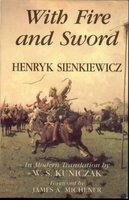 **** With Fire and Sword by Henryk Sienkiewicz. Historical fiction.
And when I say "much deliberation," I'm not kidding. I started with the first name on the list and searched until I found something that was a) fiction, b) not poetry, c) available in English, d) by an author I hadn't read before.
Sienkiewicz was the 6th name on the list. Then I had to decide which book. Well, the reviews were pretty unanimous that his trilogy was his best work, and With Fire and Sword is the first of the trilogy. Then I had to find which was the best translation (from Polish), and one that came in just one volume--this edition has 1135 pages, and it's hardcover. I'm getting a workout just carrying it around.
With Fire and Sword takes place in 17th Century Poland, and it chronicles the war between the Cossacks and the Polish gentry, from the perspective of the people involved. Once again, I'm reminded that this is an immeasurably more interesting way to view history than rote memorization of names and dates, and I wish I could go thump all my history teachers over the head with this big fat book.
It's mostly about Pan Yan something-or-other (the names gave me fits), a distinguished young lieutenant in the service of Prince Yeremi (or Yarema--I never did figure out the difference--I'm guessing one is the familiar form?). He's returning from a mission, when he sees a man who's been attacked and nearly killed, so he rescues him. The man turns out to be Hmyel...whatsis, whose feud with his neighbor is what starts the Cossack rebellion.
Pan Yan meets a young woman and falls in love, but her family has promised her to Bohun, of whom she's afraid. Much of the book concerns Pan Yan and his friends' attempts to rescue her and get her back together with Pan Yan, with an extremely brutal war in the way. Pan Yan is a romantic hero, a knight in shining armor, full of honor, devotion to duty, and devotion to his lady.
His friends are fascinating and entertaining characters. There's his squire, Zjendjan, who's a tricky young man, always out to make a profit, but nonetheless absolutely loyal. There's the giant Podbipyenta, who's vowed to remain celibate until he can best his ancestor's record and chop off three heads with one stroke. There's the diminutive Michal who's a master swordsman. And there's Zagloba, fat, older, prone to extreme exaggeration, a drama queen, who's a reluctant hero.
The Prince, Bohun, the rebel leader, and the government officials are more minor characters, but like the main characters, they're made real, and their motivations and doubts and emotions are all clearly drawn.
The story goes from one hair-raising situation to the next, and just when it looks as if things will be okay after all, something even worse happens. I think I read, either in the foreword, or in my research when choosing this book, that it was initially serialized in a newspaper. If it wasn't, it should have been, because that's how it reads. I could easily imagine reading one of the segments and then anxiously waiting for the next edition so I could find out what happened next.
I was quite pleasantly surprised by how entertaining and readable it was, by how engrossed I became in the story, and by the fact that I wasn't tempted to put it down and read something else, even though it took me the better part of a week to read it.
So, why only 4 stars? It's purely for the enjoyment factor. I did enjoy it, but it's not something I'll ever read again, and not even something I feel enriched by. I didn't finish it thinking "what a great book!" I'm not a student of history, or of eastern Europe, so the fact that it's written from apparently the wrong side of that conflict completely escaped me (until I read the reviews that pointed it out, of course).
I'm glad I read it, and I'll remember the characters, but I doubt I'll look for the other two books in the trilogy, or by Sienkiewicz's other works.
...more
Categories: Books, ReadingChallenge, 4stars, HistoricalFiction
The reading challenge for fall is to read a book written by a Nobel Prize-winning author. You can find a list of the authors on Wikipedia.
To participate, post a comment here or on your blog telling what you read, what you thought of it, and whether you'd read something from this category again.
After much deliberation, I chose:
 **** With Fire and Sword by Henryk Sienkiewicz. Historical fiction.
And when I say "much deliberation," I'm not kidding. I started with the first name on the list and searched until I found something that was a) fiction, b) not poetry, c) available in English, d) by an author I hadn't read before.
Sienkiewicz was the 6th name on the list. Then I had to decide which book. Well, the reviews were pretty unanimous that his trilogy was his best work, and With Fire and Sword is the first of the trilogy. Then I had to find which was the best translation (from Polish), and one that came in just one volume--this edition has 1135 pages, and it's hardcover. I'm getting a workout just carrying it around.
With Fire and Sword takes place in 17th Century Poland, and it chronicles the war between the Cossacks and the Polish gentry, from the perspective of the people involved. Once again, I'm reminded that this is an immeasurably more interesting way to view history than rote memorization of names and dates, and I wish I could go thump all my history teachers over the head with this big fat book.
It's mostly about Pan Yan something-or-other (the names gave me fits), a distinguished young lieutenant in the service of Prince Yeremi (or Yarema--I never did figure out the difference--I'm guessing one is the familiar form?). He's returning from a mission, when he sees a man who's been attacked and nearly killed, so he rescues him. The man turns out to be Hmyel...whatsis, whose feud with his neighbor is what starts the Cossack rebellion.
Pan Yan meets a young woman and falls in love, but her family has promised her to Bohun, of whom she's afraid. Much of the book concerns Pan Yan and his friends' attempts to rescue her and get her back together with Pan Yan, with an extremely brutal war in the way. Pan Yan is a romantic hero, a knight in shining armor, full of honor, devotion to duty, and devotion to his lady.
His friends are fascinating and entertaining characters. There's his squire, Zjendjan, who's a tricky young man, always out to make a profit, but nonetheless absolutely loyal. There's the giant Podbipyenta, who's vowed to remain celibate until he can best his ancestor's record and chop off three heads with one stroke. There's the diminutive Michal who's a master swordsman. And there's Zagloba, fat, older, prone to extreme exaggeration, a drama queen, who's a reluctant hero.
The Prince, Bohun, the rebel leader, and the government officials are more minor characters, but like the main characters, they're made real, and their motivations and doubts and emotions are all clearly drawn.
The story goes from one hair-raising situation to the next, and just when it looks as if things will be okay after all, something even worse happens. I think I read, either in the foreword, or in my research when choosing this book, that it was initially serialized in a newspaper. If it wasn't, it should have been, because that's how it reads. I could easily imagine reading one of the segments and then anxiously waiting for the next edition so I could find out what happened next.
I was quite pleasantly surprised by how entertaining and readable it was, by how engrossed I became in the story, and by the fact that I wasn't tempted to put it down and read something else, even though it took me the better part of a week to read it.
So, why only 4 stars? It's purely for the enjoyment factor. I did enjoy it, but it's not something I'll ever read again, and not even something I feel enriched by. I didn't finish it thinking "what a great book!" I'm not a student of history, or of eastern Europe, so the fact that it's written from apparently the wrong side of that conflict completely escaped me (until I read the reviews that pointed it out, of course).
I'm glad I read it, and I'll remember the characters, but I doubt I'll look for the other two books in the trilogy, or by Sienkiewicz's other works.
...more
Categories: Books, ReadingChallenge, 4stars, HistoricalFiction
Labels: 4 stars, books, HistoricalFiction, reading challenge
